
One in five men worldwide has a high-risk HPV infection. Experts highlight the importance of vaccination and Romania’s low vaccination coverage.
Who Should Set Screening Recommendations? JAMA Examines the Mammography Debate

Adaugă Medic24 în sursele preferate Google
JAMA examines the dispute between ACP and radiologists over breast cancer screening and who should develop medical recommendations.
At what age should mammography screening begin, and how often should it be performed? Differences between recommendations issued by major US medical organizations have revived a broader question: who should develop screening guidelines — specialists who diagnose and treat the disease, or experts in prevention and primary care? An analysis published in JAMA examines this debate in light of updated American College of Physicians recommendations for breast cancer screening.
The article, published in the Medical News section of JAMA, discusses the reactions prompted in the United States by the April 2026 update of the American College of Physicians (ACP) recommendations for asymptomatic women at average risk of breast cancer.
The debate is relevant beyond mammography itself: it illustrates how the same body of scientific evidence can lead to different recommendations depending on how the benefits and potential harms of screening are weighed.
ACP recommends mammography every two years between ages 50 and 74
The 2026 recommendations published by the American College of Physicians call for mammography every two years in asymptomatic women at average risk between the ages of 50 and 74.
For women aged 40 to 49, ACP recommends an individualized discussion with a physician about breast cancer risk and the balance between the benefits and potential harms of screening before a decision is made.
Potential disadvantages considered by ACP include false-positive results, additional investigations, overdiagnosis, overtreatment, radiation exposure, and the psychological impact of suspicious findings that are later found not to represent cancer.
For women aged 75 or older, or those with limited life expectancy, ACP recommends discussing whether screening should be continued. For women with dense breasts, the organization states that digital breast tomosynthesis may be considered, but it does not recommend routine supplemental screening with ultrasound or MRI in average-risk women.
Radiologists recommend annual screening beginning at age 40
The ACP position was criticized by the American College of Radiology (ACR) and the Society of Breast Imaging (SBI). The two organizations support beginning annual mammography screening at age 40 for women at average risk.
ACR and SBI argue that less intensive screening recommendations may delay the diagnosis of some cancers and have challenged the way ACP evaluates the risks associated with screening. The radiology organizations have also argued that specialists directly involved in breast cancer diagnosis and treatment should have a greater role in developing screening recommendations.
This position leads directly to the central question raised by the JAMA article: who is best placed to develop screening guidelines?
USPSTF recommends mammography every two years beginning at age 40
The picture is further complicated by the fact that other US organizations offer different recommendations.
The US Preventive Services Task Force (USPSTF) has recommended since 2024 that all average-risk women aged 40 to 74 undergo mammography every two years. For women aged 75 and older, USPSTF considers the available evidence insufficient to determine the balance between benefits and harms.
USPSTF therefore agrees with ACP on the two-year screening interval but not on the age at which routine screening should begin.
The American Cancer Society takes a different approach. ACS recommendations state that women aged 40 to 44 may choose to begin annual mammography, women aged 45 to 54 should undergo annual screening, and women aged 55 and older may switch to screening every two years or continue annual screening.
The same evidence, different interpretations
The differences do not necessarily mean that one organization is disregarding the scientific evidence. JAMA highlights the fact that different groups may assign different weight to the same outcomes.
Specialists who diagnose and treat cancer may place greater emphasis on the risk that a tumor could be detected later. Experts in prevention and physicians caring for large populations of healthy people must also consider the consequences of applying screening to a very large number of individuals who will never develop the disease.
The same intervention must therefore be evaluated both in terms of cancers and deaths that may be prevented and in terms of false-positive results, biopsies and additional investigations, overdiagnosis, and treatments that may result from screening.
Who should write the guidelines?
The JAMA article contrasts two perspectives. On the one hand, specialists in a particular disease have extensive expertise regarding its diagnosis, progression, and treatment. On the other hand, screening primarily targets people without symptoms, making rigorous evaluation of evidence and of the balance between benefits and harms at population level essential.
The debate therefore suggests that the question may not simply be whether guidelines should be developed by specialists or primary care physicians, but rather how disease-specific clinical expertise, epidemiology, evidence-based medicine methodology, and the perspective of preventive care can be combined.
JAMA also notes that screening guidelines do not always present all relevant types of potential harm in the same degree of detail, which can influence how physicians and patients interpret the balance between benefits and risks.
The discussion presented in JAMA concerns recommendations issued by medical organizations in the United States and does not represent a change to breast cancer screening protocols applicable in Romania. It nevertheless highlights a broader issue relevant to evidence-based medicine: clinical recommendations do not arise solely from the existence of scientific studies, but also from how benefits, harms, uncertainties, and patient preferences are weighed during the guideline development process.
Medic24 - Romania's healthcare system at a glance

Romania introduces new medical fitness rules for obtaining and renewing driving licences from 6 November 2026. What changes for drivers and doctors?
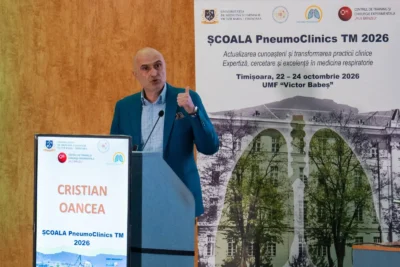
Dr. Cristian Oancea warns that persistent coughing in smokers may be a sign of lung cancer. Learn which warning signs require medical investigation.

Romania’s Parliament approves the Luca Niculescu government. Alexandru Rogobete is set to return as Health Minister, with healthcare funding and CNAS reform among his priorities.

Influenza vaccines for the 2026–2027 season in Romania: trivalent formulations, age groups, doses, contraindications, reimbursement and storage requirements.
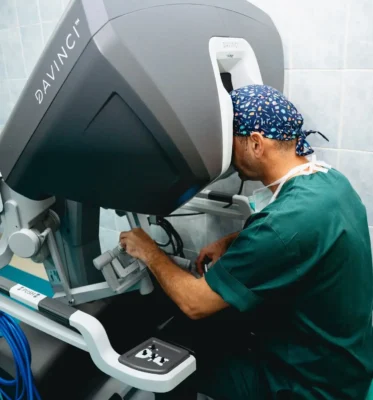
Cluj Oncology Institute has completed its 100th robot-assisted operation, performed on a 59-year-old woman with rectal cancer by dr. Cătălin Vlad’s team.