
One in five men worldwide has a high-risk HPV infection. Experts highlight the importance of vaccination and Romania’s low vaccination coverage.
HPV in Men: One in Five Is Infected with a High-Risk Type

Adaugă Medic24 în sursele preferate Google
One in five men worldwide has a high-risk HPV infection. Experts highlight the importance of vaccination and Romania's low vaccination coverage.
Worldwide, one in three men over the age of 15 is infected with at least one type of genital human papillomavirus (HPV), while one in five has an infection with a high-risk, cancer-associated HPV type. These findings were presented at the Congress of the Carol Davila University of Medicine and Pharmacy in Bucharest, where experts highlighted the importance of HPV vaccination for both sexes, including in adulthood.
The figures come from a meta-analysis published in The Lancet Global Health and were presented by Professor Victoria Aramă, MD, PhD, from the Prof. Dr. Matei Balș National Institute for Infectious Diseases and Carol Davila University of Medicine and Pharmacy, during the symposium „Expanding HPV Vaccination Beyond Primary Target Cohorts.”
HPV in Men: Common Infections, but No Routine Screening Programmes
Human papillomavirus (HPV) infection is the most common sexually transmitted infection. In most cases, the body clears the virus spontaneously. However, persistent infection with oncogenic HPV types can lead to precancerous lesions and certain forms of cancer.
In men, HPV is associated with penile, anal and oropharyngeal cancers. Unlike cervical cancer, these cancers do not have comparable population-based screening programmes, which may contribute to delayed diagnosis.
According to data presented at the congress, approximately one man worldwide is diagnosed with an HPV-related cancer every 30 minutes.
Professor Victoria Aramă emphasised that the association between HPV and penile or anal cancers is well documented, even though these cancers are less common than cervical cancer.
Vaccinating boys and men contributes both to individual protection and to reducing the circulation of the virus in the population.
HPV Vaccination Can Also Be Given in Adulthood
Experts point out that the optimal age for HPV vaccination is between 9 and 14 years, before exposure to the virus. However, vaccination may also provide benefits later in life, including for adults up to the age of 45.
The risk of acquiring a new HPV infection persists throughout sexually active life. According to the information presented at the congress, the first peak in HPV infections occurs between the ages of 20 and 25, while infections acquired later in life may carry a greater risk of persistence.
HPV testing or a Pap smear is not required before vaccination. For individuals who begin vaccination at age 15 or older, the standard schedule consists of three doses.
The vaccine prevents new infections with the HPV types covered by the vaccine but does not treat existing infections. Vaccination also does not replace cervical cancer screening.
Romania Offers Free HPV Vaccination Up to Age 26, but Coverage Remains Low
According to a press release from Carol Davila University of Medicine and Pharmacy, Romania has one of the most extensive HPV vaccination reimbursement schemes in the European Union.
Under the current reimbursement rules:
- Girls and boys aged 11 to 26: full reimbursement (100%);
- Women aged 27 to 45: 50% reimbursement;
- Men over the age of 26: vaccination is available upon medical recommendation, but without reimbursement.
Despite these provisions, Romania remains among the European countries with the lowest HPV vaccination rates.
According to ECDC data for 2024, approximately 23% of adolescent girls in Romania had received at least their first HPV vaccine dose, compared with a European average of approximately 70%. Romania therefore had the second-lowest vaccination coverage in the European Union.
At the same time, Romania continues to record the highest incidence and mortality rates for cervical cancer in the EU. According to figures cited by the university, approximately 3,500 women are diagnosed with the disease each year, and around 1,800 die from it.
The Role of Family Doctors in Increasing HPV Vaccination
One of the main messages of the symposium concerned the importance of medical recommendations in improving vaccine acceptance.
According to studies cited by the experts, an explicit recommendation from a doctor can increase the likelihood of initiating HPV vaccination by up to tenfold.
Data from Romania’s National Institute of Public Health indicate a positive trend in the number of vaccine doses administered: from several tens of thousands of doses per quarter in 2024 to approximately 100,000 doses per quarter in 2026.
Nevertheless, vaccine hesitancy remains a significant obstacle, particularly when parents are deciding whether to vaccinate their children.
Professor Victoria Aramă noted that, despite expanded access to vaccination, Romania still ranks near the bottom of European comparisons in terms of vaccine acceptance, although vaccination coverage has improved over the past two years.
HPV Infection Can Also Occur in Monogamous Relationships
Doctors emphasise that HPV infection can remain asymptomatic for long periods. Therefore, detecting an infection does not establish when transmission occurred or from whom the virus was acquired.
Condom use does not completely eliminate the risk of transmission, as HPV can also spread through contact with areas of skin not covered by a condom.
In this context, experts recommend approaching HPV prevention as a shared responsibility of both partners, through education, vaccination and access to medically indicated consultations and investigations.
The findings were presented at the 14th Congress of Carol Davila University of Medicine and Pharmacy, held from 22 to 24 October 2026 at the Palace of Parliament in Bucharest, with more than 11,000 doctors, researchers and students attending.
Medic24 - Romania's healthcare system at a glance

Romania introduces new medical fitness rules for obtaining and renewing driving licences from 6 November 2026. What changes for drivers and doctors?
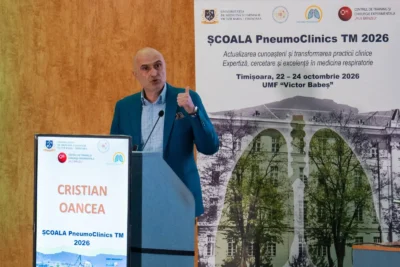
Dr. Cristian Oancea warns that persistent coughing in smokers may be a sign of lung cancer. Learn which warning signs require medical investigation.
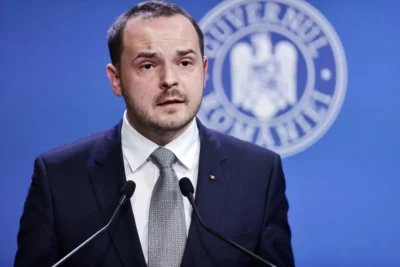
Romania’s Parliament approves the Luca Niculescu government. Alexandru Rogobete is set to return as Health Minister, with healthcare funding and CNAS reform among his priorities.

Influenza vaccines for the 2026–2027 season in Romania: trivalent formulations, age groups, doses, contraindications, reimbursement and storage requirements.
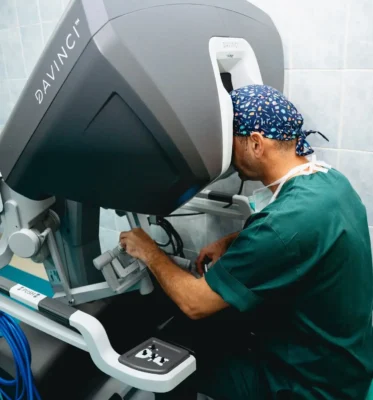
Cluj Oncology Institute has completed its 100th robot-assisted operation, performed on a 59-year-old woman with rectal cancer by dr. Cătălin Vlad’s team.