
Romania’s Parliament approves the Luca Niculescu government. Alexandru Rogobete is set to return as Health Minister, with healthcare funding and CNAS reform among his priorities.
Influenza Vaccines in Romania: A Guide for the 2026–2027 Season

Adaugă Medic24 în sursele preferate Google
Influenza vaccines for the 2026–2027 season in Romania: trivalent formulations, age groups, doses, contraindications, reimbursement and storage requirements.
Updated on 9 October 2026, based on official recommendations and the authorised product information for the vaccines.
Influenza vaccines for the 2026–2027 season have an updated composition, containing two influenza A components and one B/Victoria component. In Romania, vaccine selection depends on age, contraindications and administration recommendations, while reimbursement depends on the patient’s eligibility category.
This guide covers the main influenza vaccines relevant to clinical practice in Romania, dosing schedules, access through reimbursed prescriptions and storage requirements. For family physicians, both recommending vaccination and coordinating the process from prescribing and pharmacy dispensing to administration are important.
CONTENTS
- Overview of the 2026–2027 influenza season
- Vaccine composition recommended by WHO and EMA
- When influenza vaccination is recommended
- Vaccine types and authorised age groups
- Indications, contraindications and precautions
- Categories eligible for reimbursement
- Doses and administration schedules
- Coadministration with other vaccines
- The role of family physicians and vaccination records
- Vaccine storage and transportation
- Prescribing, costs and reimbursement of administration services
- Frequently asked questions
- Key considerations for the 2026–2027 season
Overview of the 2026–2027 influenza season
On 2 October 2026, the Romanian Ministry of Health recommended starting influenza vaccination, prioritising vulnerable individuals. The announcement refers to vaccine administration in family medicine practices and authorised community pharmacies.
On 24 September 2026, the National Institute of Public Health published its surveillance methodology for the 2026–2027 season. Influenza activity should be monitored through weekly reports, without treating data from previous seasons as reliable predictions for the coming winter.
The main developments this season are the updating of all three vaccine components compared with the 2025–2026 recommendations and the use of trivalent formulations. The severity of the season and the observed effectiveness of vaccination can be assessed as epidemiological and clinical data become available.
Influenza vaccine composition for the 2026–2027 season
The WHO recommendations for the Northern Hemisphere, published on 27 February 2026, include the following components:
| Component | Egg-based vaccines | Cell culture-based, recombinant or nucleic acid-based vaccines |
|---|---|---|
| A(H1N1)pdm09 | A/Missouri/11/2025-like strain | A/Missouri/11/2025-like strain |
| A(H3N2) | A/Darwin/1454/2025-like strain | A/Darwin/1415/2025-like strain |
| B/Victoria | B/Tokyo/EIS13-175/2025-like strain | B/Pennsylvania/14/2025-like strain |
The EMA recommendations for the 2026–2027 season confirm these three components and support the removal of the B/Yamagata component, a lineage that has not been detected in circulation since March 2020. For live attenuated vaccines, the same reference components as those recommended for egg-based vaccines are specified.
The name of a strain actually used in manufacturing may differ from that of the reference virus, provided it is an accepted similar strain. The composition of the administered product should be verified in its Summary of Product Characteristics (SmPC, referred to as RCP in Romanian documentation) and in the batch documentation for the relevant season.
When influenza vaccination is recommended
The Romanian national therapeutic protocol for influenza vaccines, updated by Order No. 467/1,044/2025, provides for annual administration, preferably starting in October, with vaccination continuing throughout the influenza season.
Autumn vaccination aims to establish protection before influenza virus circulation intensifies. According to the CDC information on influenza vaccination, it takes approximately two weeks for protective antibodies to develop.
People who were not vaccinated in the autumn may still be eligible for vaccination as long as influenza viruses continue to circulate. For children requiring two doses, scheduling must also take into account the minimum interval between administrations.
Influenza vaccines relevant to clinical practice in Romania
The authorised product information consulted for Vaxigrip, Influvac and Efluelda was revised in August 2026 and specifies the composition for the 2026–2027 season. European product information for Fluenz was updated in September 2026.
| Vaccine | Type | Authorised age | Dose and administration |
|---|---|---|---|
| Vaxigrip | Trivalent, inactivated, split-virion vaccine with a standard antigen dose | From 6 months of age; includes adults and use during pregnancy | 0.5 mL; preferably intramuscularly, with subcutaneous administration also permitted according to the SmPC |
| Influvac | Trivalent, inactivated, surface antigen vaccine with a standard dose | From 6 months of age | 0.5 mL; intramuscularly or by deep subcutaneous injection, according to the SmPC |
| Efluelda | Trivalent, inactivated, high-dose antigen vaccine | Adults aged 60 years and over | 0.5 mL; preferably intramuscularly; the SmPC also permits subcutaneous administration |
| Fluenz | Trivalent, live attenuated vaccine | From 2 years of age up to, but not including, 18 years | 0.2 mL intranasally: 0.1 mL in each nostril; must not be injected |
Inclusion in the Romanian National Agency for Medicines and Medical Devices (ANMDMR) medicines register confirms a product’s authorisation status but does not guarantee that it is in stock at every pharmacy. Local availability and the seasonal formulation dispensed must be checked when obtaining the vaccine.
Standard-dose inactivated vaccines
Vaxigrip and Influvac each contain 15 micrograms of haemagglutinin for each of the three components. They are options for adults and children from 6 months of age. Inactivated vaccines do not contain live influenza virus capable of replication and cannot cause influenza.
High-dose vaccine for adults aged 60 years and over
Efluelda contains 60 micrograms of haemagglutinin per component, four times the amount found in standard-dose vaccines. The Romanian protocol recommends its preferential use in people aged 60 years and over. If unavailable, a standard-dose inactivated vaccine may be used.
In the clinical trial described in the SmPC, conducted in individuals aged at least 65 years, the high-dose vaccine reduced the risk of laboratory-confirmed influenza by 24.2% compared with the standard-dose vaccine (relative vaccine efficacy). This is a comparative result from previous influenza seasons and does not represent an estimate of vaccine effectiveness for the winter of 2026–2027.
Intranasal live attenuated vaccine
Fluenz provides a needle-free administration option for eligible children and adolescents. The EMA assessment of the product describes its indications and restrictions on use. Selecting this vaccine requires checking the contraindications specific to live attenuated vaccines.
„Tetra” products and the transition to trivalent formulations
Vaxigrip and Vaxigrip Tetra are distinct products, as are Influvac and Influvac Tetra, or Efluelda and Efluelda Tetra. The suffix „Tetra” should not be interpreted as the name of a vaccine that has become trivalent without a change of product.
The discontinuation notices published by ANMDMR record the permanent discontinuation of marketing for Vaxigrip Tetra, Influvac Tetra and Efluelda Tetra. Fluenz is also a trivalent formulation distinct from Fluenz Tetra.
Influenza vaccine prices in 2026–2027
The price of an influenza vaccine during the 2026–2027 season varies by pharmacy and brand. At Farmacia Tei, Influvac and Vaxigrip cost approximately RON 80 at the time this article was prepared.
Other vaccine platforms authorised in the European Union
Other vaccine technologies are also authorised in the EU, each with its own indications:
- Flucelvax: an inactivated, cell culture-based vaccine indicated from 6 months of age;
- Fluad: an adjuvanted inactivated vaccine indicated from 50 years of age;
- Supemtek: a trivalent recombinant vaccine indicated from 9 years of age.
European authorisation, actual marketing in Romania and access through reimbursement must be verified separately. The existence of these authorisations does not justify presenting all these products as available in Romanian pharmacies.
Indications, contraindications and precautions
Vaccine selection requires assessment of the patient’s age, history of allergic reactions, medical conditions and current treatments. The SmPC of the product being used specifies the applicable contraindications and precautions.
- Severe allergic reactions to a previous influenza vaccine or to any component of the product require evaluation before another dose is administered. Egg allergy and allergy to a vaccine should not be treated as identical situations.
- Acute febrile illness or a significant acute medical condition may require vaccination to be postponed. A mild cold without fever is not automatically a contraindication.
- Pregnancy: standard-dose inactivated influenza vaccines can be used during all trimesters. The SmPCs for Vaxigrip and Influvac also permit use during breastfeeding.
- Immunosuppression: vaccine selection and timing should take into account the underlying condition and treatment. The immune response may be reduced.
For Fluenz, contraindications include certain immunodeficiencies and immunosuppressive therapies, treatment with salicylates, and severe allergic reactions to eggs or egg proteins. It must not be administered in cases of severe asthma or active wheezing and is not recommended during pregnancy or breastfeeding. Nasal obstruction may require administration to be postponed.
A history of Guillain–Barré syndrome occurring within six weeks of influenza vaccination, as well as coagulation disorders, requires individual assessment of benefits, risks and administration technique.
Who is eligible for reimbursed influenza vaccination in 2026–2027?
Eligibility categories are established by Romanian Ministry of Health Order No. 3,120/2023, as subsequently amended. For insured individuals who meet the criteria, reimbursement is calculated against the reference price.
| Category | Reimbursement of the reference price |
|---|---|
| Children and adolescents from 6 months of age up to, but not including, 19 years | 100% |
| Pregnant women | 100% |
| Individuals aged 19 to under 65 years with the medical conditions or risk factors specified in the Order | 100% |
| Individuals over 65 years of age, according to the wording of the legal provision | 100% |
| Medical, healthcare and auxiliary healthcare personnel | 100% |
| Individuals aged 45 to under 65 years without chronic diseases | 50% |
For the 19–64 age group, the list includes chronic cardiovascular, respiratory, renal, hepatic and neurological diseases; metabolic, oncological or autoimmune conditions; congenital malformations; and obesity. It also covers asplenia or preparation for splenectomy, HIV/AIDS, immunosuppressive therapy, transplantation and congenital immunosuppression.
Product indications and reimbursement eligibility are separate criteria. The fact that Efluelda is indicated from 60 years of age does not automatically entitle all individuals aged 60–64 to 100% reimbursement. A patient in this age group who has no chronic diseases and meets no other criteria for full reimbursement qualifies for 50% reimbursement of the reference price.
Further details on access and eligibility are also available in the Medic24 article „Reimbursed Influenza Vaccines: Who Is Eligible in the 2026–2027 Season”.
Doses, administration and recommended intervals
Standard-dose injectable vaccines
For Vaxigrip and Influvac, the dose is 0.5 mL, including for children aged 6–35 months. Routinely reducing the dose to 0.25 mL is not consistent with the doses specified in the current SmPCs for these products.
For children under 9 years of age who have not previously received an influenza vaccine, the SmPCs specify a second 0.5 mL dose after an interval of at least four weeks. Vaccination history should be checked before establishing the schedule.
The injection site is selected according to age and muscle mass: the anterolateral aspect of the thigh in young children or the deltoid muscle in older children and adults, in accordance with the SmPC.
Efluelda
The dose of the current trivalent formulation is 0.5 mL for adults aged 60 years and over. This volume should not be confused with that of an earlier quadrivalent formulation.
Fluenz
The dose is 0.2 mL intranasally, divided between the two nostrils. The current SmPC recommends a second dose, at least four weeks later, for children aged 2–8 years who have not previously been vaccinated against seasonal influenza.
A difference in wording relevant to prescribers: The Fluenz SmPC updated in September 2026 includes 8-year-old children in the two-dose primary vaccination schedule. The Romanian national protocol consulted, updated in 2025, refers to children under 8 years of age. For an 8-year-old child, this difference should be clarified at the time of prescribing by considering the SmPC schedule alongside the applicable reimbursement rules.
Can influenza vaccines be administered alongside other vaccines?
Inactivated influenza vaccines may be administered during the same visit as other indicated vaccines, using separate syringes and injection sites. The CDC recommendations on vaccine administration and coadministration describe this practice and the precautions applicable to different vaccine types.
Coadministration with COVID-19 or pneumococcal vaccines should be assessed according to the indications for each product. Vaccines must not be mixed in the same syringe.
For live attenuated vaccines, simultaneous administration and intervals between doses require separate consideration. If two live vaccines, whether injectable or intranasal, are not administered on the same day, the general recommendation is an interval of at least four weeks. The Fluenz SmPC permits coadministration with certain live vaccines and states that concomitant administration with inactivated vaccines has not been studied.
Antiviral medicines active against influenza may reduce the effectiveness of the live attenuated vaccine. The timing of Fluenz administration should therefore follow the SmPC.
The role of family physicians in influenza vaccination
In family medicine practices, vaccination recommendations can be incorporated into consultations for chronic diseases, pregnancy monitoring, and the assessment of children or older adults. Practical arrangements may include:
- identifying patients for whom vaccination is indicated and checking their eligibility for reimbursement;
- selecting a product authorised for the patient’s age and clinical circumstances;
- explaining the benefits, limitations of protection and possible adverse reactions;
- scheduling administration in coordination with vaccine collection from the pharmacy;
- providing instructions on transportation and storage;
- planning the second dose for children who require it.
Before administration, the product, batch number, expiry date, storage conditions and any contraindications must be checked. Vaccination staff must have the necessary facilities and equipment available to monitor and manage severe allergic reactions.
Vaccination must be recorded in the patient’s medical records and in Romania’s National Electronic Vaccination Register (RENV), in accordance with the regulations governing reporting to RENV. Recording the product name and batch number ensures traceability, while documenting previous vaccinations helps determine subsequent vaccination schedules.
Storage and transportation: maintaining the cold chain
The SmPCs of the products covered in this guide specify storage at 2–8°C, without freezing, in the original packaging to protect the vaccine from light. For Fluenz, the product information also explicitly requires refrigerated transportation.
Transportation between the pharmacy and the medical practice must be organised to maintain the recommended conditions. The WHO guidance on insulated containers and coolant packs emphasises the importance of preventing vaccines from being exposed to freezing temperatures. Direct contact with fully frozen ice packs can damage freeze-sensitive vaccines.
Temperature must be monitored at the medical practice. If a temperature excursion occurs, the duration and temperature of exposure should be documented, the affected doses should be segregated, and an assessment based on the product documentation should be requested. A vaccine’s normal appearance alone does not demonstrate that its quality has been maintained.
The Vaxigrip SmPC reports stability for 72 hours at temperatures up to 25°C ±2°C. These data are intended for professional assessment of a temporary temperature excursion and do not represent recommended storage conditions. They must not be extrapolated to Influvac, Efluelda or Fluenz.
Allowing injectable vaccines to reach room temperature before use is a preparation step specified in the SmPC. It does not justify routine storage outside the refrigerator.
Prescribing, costs and reimbursement of administration services
Prescribing and pharmacy dispensing
According to information published by Romania’s National Health Insurance House (CNAS) on reimbursed vaccines, prescriptions may be issued by physicians of any specialty who have a contract with a health insurance house, subject to compliance with the relevant protocols. The electronic prescription is valid for 30 days.
Vaccines are administered by physicians authorised under the applicable regulations: family physicians, epidemiologists, infectious disease specialists, paediatricians or physicians from other specialties holding certification in vaccinology. Influenza vaccines may also be administered by qualified pharmacist vaccinators under the conditions of the applicable programme.
Pharmacies authorised to provide this service can be checked against the list published by the Ministry of Health. Pharmacy authorisation, patient eligibility for vaccination at a pharmacy and vaccine availability must all be verified before scheduling an appointment.
What 50% or 100% reimbursement means
The percentages apply to the reference price. The patient’s contribution depends on the price of the dispensed product and the reimbursed amount. Reimbursement of 100% of the reference price should not automatically be interpreted as meaning that no additional payment is required for every product.
Individuals who do not meet the reimbursement criteria may purchase the vaccine at full price with a prescription. The actual cost and any patient contribution are confirmed by the pharmacy when the vaccine is dispensed.
Reimbursement of the vaccination service
The cost of the vaccine and payment for its administration are separate components. Order No. 3,363/2023 establishes a fee of RON 40 for the vaccination service provided by a family physician, including vaccines obtained with 50% or 100% reimbursement, subject to the applicable contracting, reporting and service validation requirements, based on the report generated by RENV.
Administration of reimbursed vaccines therefore has a separate reimbursement mechanism. Any service costs arising through a different administration pathway should be communicated to the patient before vaccination.
Frequently asked questions about influenza vaccination
Does the vaccine provide complete protection against influenza?
Protection varies according to the season, the match between vaccine strains and circulating viruses, and the characteristics of the vaccinated individual. The CDC overview of seasonal influenza vaccines explains that vaccination can reduce the risk of illness and severe disease, although some vaccinated individuals may still develop influenza. At the beginning of the 2026–2027 season, a definitive percentage of protection cannot be assigned to the coming winter.
Does the influenza vaccine also prevent common colds?
The vaccine targets the influenza viruses included in its formulation and does not protect against all respiratory infections. The CDC explains the differences between influenza viruses and other respiratory viruses. Developing a common cold after vaccination does not demonstrate influenza vaccine failure.
Is vaccination from the previous season sufficient?
Vaccination is repeated annually because the vaccine composition is adapted to circulating viruses and immune protection decreases over time. The appropriate seasonal vaccine should be used for 2026–2027, even if the individual was vaccinated during the 2025–2026 season.
Can a one-year-old child receive the intranasal vaccine?
Fluenz is authorised from 2 years of age. For a one-year-old child, the options covered in this guide are inactivated vaccines authorised from 6 months of age, with the vaccination schedule determined according to previous vaccination history.
Can vaccination still be indicated if someone has already had influenza?
An episode of influenza does not guarantee protection against other influenza viruses that may circulate during the same season. After recovery, the physician may still recommend vaccination, taking into account the patient’s clinical condition and influenza virus circulation. Vaccination does not treat an ongoing episode of influenza.
What adverse reactions may occur, and how should they be reported?
Injectable influenza vaccines may cause pain at the injection site, headache, muscle pain, fatigue or fever. Nasal congestion and a runny nose are common with Fluenz. The adverse reaction profile should be checked in the package leaflet of the administered product.
Patients and healthcare professionals can report suspected adverse reactions to ANMDMR. In an emergency, such as breathing difficulties, facial swelling or loss of consciousness following vaccination, emergency services should be contacted by calling 112. Reporting an event does not, in itself, establish that the vaccine caused it.
Key considerations for the 2026–2027 season
For clinical practice, the main priorities are using the appropriate seasonal formulation, selecting a product suited to the patient’s age and clinical circumstances, correctly applying reimbursement criteria and maintaining the required storage conditions.
The SmPC of the administered product and the applicable prescribing regulations should be reviewed whenever updates are issued, while influenza surveillance data should be monitored throughout the season.
Medic24 - Romania's healthcare system at a glance

Influenza vaccines for the 2026–2027 season in Romania: trivalent formulations, age groups, doses, contraindications, reimbursement and storage requirements.
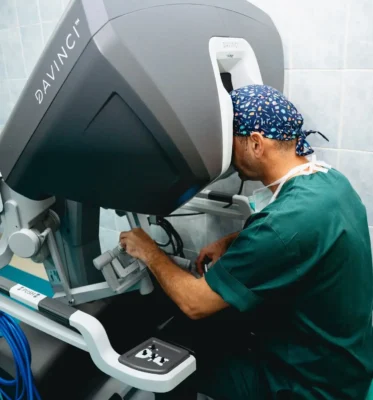
Cluj Oncology Institute has completed its 100th robot-assisted operation, performed on a 59-year-old woman with rectal cancer by dr. Cătălin Vlad’s team.

Romania’s 2026 residency exam offers 645 Family Medicine places. See the allocation by university centre and the registration deadline for the 15 November exam.

UMF Iași hosts the EduCare 5.0 conference on 7–11 October 2026. The agenda includes digital oncology and healthcare innovation projects.
Fundeni reports a living-donor liver transplant with robotic graft retrieval. Both the donor and recipient are recovering favourably.