Romania’s Parliament approves the Luca Niculescu government. Alexandru Rogobete is set to return as Health Minister, with healthcare funding and CNAS reform among his priorities.
Fundeni announces first liver transplant with robotic graft retrieval

Foto: Institutul Clinic Fundeni
Adaugă Medic24 în sursele preferate Google
Fundeni reports a living-donor liver transplant with robotic graft retrieval. Both the donor and recipient are recovering favourably.
The Fundeni Clinical Institute performed a living-donor liver transplant on 30 September 2026, with robotic retrieval of the right liver lobe. The Centre for Digestive Diseases and Liver Transplantation describes the procedure as a national first in Romania, according to a press release.
The 53-year-old donor donated her right liver lobe to her 50-year-old husband, who had been diagnosed with hepatocellular carcinoma arising in hepatitis C virus-associated cirrhosis. According to the centre, both patients were recovering favourably at the time of the announcement.
Robotic retrieval and graft implantation
Robotic graft retrieval was performed by Dr Iulian Moșteanu, graft implantation by Prof. Vlad Brașoveanu, and hepatic artery anastomosis using microsurgical techniques by Dr Dragoș Zamfirescu.
The centre states that it has used laparoscopic graft retrieval from living donors since 2023. The robotic approach provides magnified three-dimensional imaging and articulated instruments for dissection.
What research shows about donor outcomes
The safety of healthy donors is a key consideration when assessing liver graft retrieval techniques. A study published in Surgical Endoscopy in 2025 retrospectively compared 37 living-donor right hepatectomies performed at a US centre: 13 using a robotic approach and 24 using open surgery.
In the robotic group, median blood loss was lower, at 200 mL versus 900 mL, but median operating time was longer: 451 versus 368 minutes. Length of hospital stay and the Comprehensive Complication Index were similar between the groups.
The authors emphasise the importance of surgical experience and team preparation. However, the study has a small sample, a retrospective design and primarily assesses short-term outcomes. Further research is needed into long-term outcomes and donors’ quality of life.
Medic24 - Romania's healthcare system at a glance

Influenza vaccines for the 2026–2027 season in Romania: trivalent formulations, age groups, doses, contraindications, reimbursement and storage requirements.
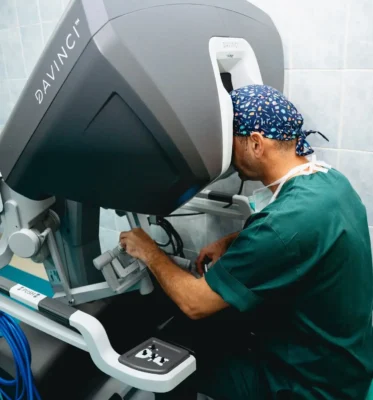
Cluj Oncology Institute has completed its 100th robot-assisted operation, performed on a 59-year-old woman with rectal cancer by dr. Cătălin Vlad’s team.

Romania’s 2026 residency exam offers 645 Family Medicine places. See the allocation by university centre and the registration deadline for the 15 November exam.
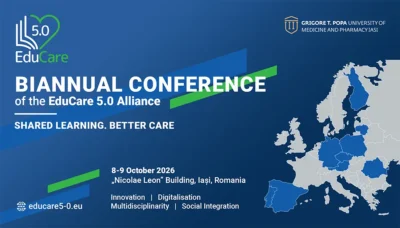
UMF Iași hosts the EduCare 5.0 conference on 7–11 October 2026. The agenda includes digital oncology and healthcare innovation projects.

Fundeni reports a living-donor liver transplant with robotic graft retrieval. Both the donor and recipient are recovering favourably.