
One in five men worldwide has a high-risk HPV infection. Experts highlight the importance of vaccination and Romania’s low vaccination coverage.
Romanian College of Pharmacists warns of declining pharmacist numbers and waning interest in the profession

Adaugă Medic24 în sursele preferate Google
CFR and pharmacy associations warn that pharmacist numbers and interest in Pharmacy faculties are declining and are calling for corrective measures.
The Romanian College of Pharmacists (CFR) and four representative pharmacy organizations are warning about declining interest among young people in the pharmacy profession, alongside a reduction in the number of active professionals. According to data cited by the organizations, between 2022 and 2025 the number of pharmacists in Romania fell by 1,478, while the number of pharmacies, drugstores and local distribution outlets increased by 208 units.
The warning was issued by the Romanian College of Pharmacists, the Association of Pharmacies and Pharmacists of Romania (AFFR), the Association of Pharmaceutical Distributors and Retailers of Romania (ADRFR), the Ethica Association of Independent Pharmacies (AFIE) and the Association of Traditional Pharmacies and Practitioners (AFTaP).
The organizations argue that the shrinking workforce does not affect community pharmacies alone, but could also have consequences for hospitals, the pharmaceutical industry, research, quality-control laboratories, universities and public health institutions.
1,478 fewer pharmacists between 2022 and 2025
According to data from the National Institute of Statistics cited in the statement, the number of pharmacists decreased by 1,478 between 2022 and 2025. Over the same period, the number of pharmacies, drugstores and local distribution outlets increased by 208.
Representatives of the sector say this trend points to a growing shortage of qualified personnel and stress that the operation of a pharmacy depends on the presence of a pharmacist.
The CFR also emphasizes that the pharmacist’s role extends well beyond community pharmacy practice. Pharmacists work in hospitals, pharmaceutical manufacturing and quality control, pharmacovigilance, research and development, academia, analytical laboratories, Public Health Directorates and the National Agency for Medicines and Medical Devices of Romania.
2026 admissions show limited interest in Pharmacy faculties
Professional organizations point to the results of the 2026 university admissions as another sign of the declining attractiveness of the profession.
At the “Carol Davila” University of Medicine and Pharmacy in Bucharest, 107 candidates applied for 114 available Pharmacy places, of whom 83 were admitted. By comparison, the Faculty of Medicine had 2,727 candidates for 985 places.
At the “Grigore T. Popa” University of Medicine and Pharmacy in Iași, only 23 candidates applied for 124 Pharmacy places, with 14 admitted, while at the “Iuliu Hațieganu” University of Medicine and Pharmacy in Cluj-Napoca there were 29 candidates for 30 state-funded places, 28 of whom were admitted.
At the “Victor Babeș” University of Medicine and Pharmacy in Timișoara, 68 candidates competed for 43 places, with 30 admitted. At the “G.E. Palade” University of Medicine, Pharmacy, Science, and Technology of Târgu Mureș, according to the statement, five state-funded places and 28 tuition-fee places remained unfilled for the autumn admission session.
A different situation was recorded at the University of Medicine and Pharmacy of Craiova, where 117 candidates competed for 30 state-funded and 55 tuition-fee places, with almost all places filled.
Why organizations believe the profession has become less attractive
The CFR and the signatory associations identify several factors behind this trend. These include insufficient integration of pharmacists into public health and prevention policies, remuneration considered inadequate in relation to the level of professional responsibility, and growing economic and administrative pressure on community pharmacies.
The organizations note that, although the pharmacist’s role has expanded in recent years to include activities such as vaccination and health education, a number of modern pharmaceutical services still lack functional mechanisms for funding and institutional recognition.
At the same time, they argue that community pharmacists in Romania continue to be perceived mainly through the lens of dispensing medicines, whereas in other European healthcare systems pharmacists are also involved in prevention, screening, treatment monitoring and chronic disease management.
Organizations warn that rural areas may be the first to feel the shortage
According to the statement, recruitment difficulties are already more visible in remote rural communities, where the pharmacy may represent one of the few readily accessible points for healthcare services and professional advice.
In the longer term, the declining number of graduates and the approaching retirement age of some current pharmacists could further worsen staff shortages, with the effects eventually extending to urban areas as well, the organizations warn.
They estimate that the shortage of specialists could also affect the recruitment of pharmacists in hospitals, pharmaceutical manufacturing and quality assurance, pharmacovigilance, research, control laboratories, universities and regulatory authorities.
CFR and pharmacy associations call for measures to restore the profession’s attractiveness
The organizations are calling on the authorities to initiate a national dialogue on the future of the pharmacy profession and propose several areas for action.
These include broader recognition of the pharmacist’s role in prevention, treatment monitoring and health education, implementation and funding of pharmaceutical services, better alignment of education policies with workforce needs, and effective integration of pharmacists into national prevention, vaccination and public health strategies.
The signatories are also calling for measures to improve the economic sustainability of community pharmacies and to simplify certain administrative and operational obligations.
The Romanian College of Pharmacists and the professional associations say they are available for dialogue with the Ministry of Health, the Ministry of Education and other relevant institutions in order to identify solutions for maintaining a qualified workforce in the pharmaceutical sector.
Medic24 - Romania's healthcare system at a glance

Romania introduces new medical fitness rules for obtaining and renewing driving licences from 6 November 2026. What changes for drivers and doctors?
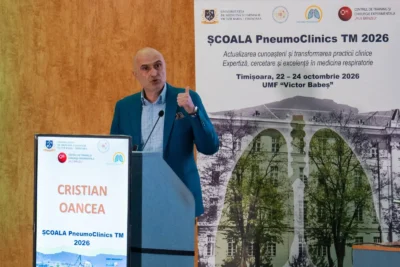
Dr. Cristian Oancea warns that persistent coughing in smokers may be a sign of lung cancer. Learn which warning signs require medical investigation.
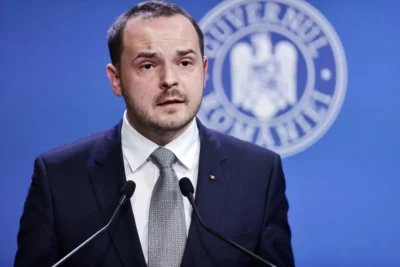
Romania’s Parliament approves the Luca Niculescu government. Alexandru Rogobete is set to return as Health Minister, with healthcare funding and CNAS reform among his priorities.

Influenza vaccines for the 2026–2027 season in Romania: trivalent formulations, age groups, doses, contraindications, reimbursement and storage requirements.
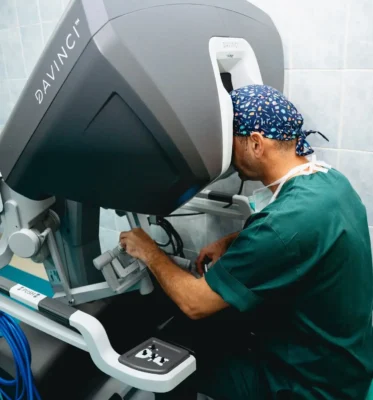
Cluj Oncology Institute has completed its 100th robot-assisted operation, performed on a 59-year-old woman with rectal cancer by dr. Cătălin Vlad’s team.