
Romania’s 2026 residency exam offers 645 Family Medicine places. See the allocation by university centre and the registration deadline for the 15 November exam.
Romania integrates MASLD into the national infrastructure for chronic liver disease screening

Adaugă Medic24 în sursele preferate Google
Romania integrates MASLD into the national infrastructure for chronic liver disease screening through the LIVE(RO)3 project.
Romania is integrating metabolic dysfunction-associated steatotic liver disease into the national infrastructure developed for chronic liver disease screening for the first time, according to a statement released on 11 June 2026, on World Fatty Liver Day.
MASLD, explicitly included in the new liver screening approach
Metabolic dysfunction-associated steatotic liver disease, popularly known as “fatty liver”, is one of the leading causes of chronic liver disease worldwide.
Against the backdrop of rising obesity, diabetes and other metabolic disorders, specialists involved in the LIVE(RO)3 project draw attention to the need for early identification of people at risk, before complications occur.
For the first time, the national infrastructure developed for chronic liver disease screening explicitly includes a component dedicated to MASLD and MASH, metabolic dysfunction-associated steatohepatitis, alongside viral hepatitis B, C and D and alcohol-related liver disease.
A paradigm shift in hepatology
The LIVE(RO)3 project contributes to the development of the framework needed for the efficient and uniform implementation of chronic liver disease screening programmes in Romania.
A key new element is the expansion of screening from viral hepatitis to the full spectrum of liver diseases with major public health impact, including metabolic dysfunction-associated liver disease.
“World Fatty Liver Day is an appropriate moment to draw attention to a condition that often progresses without symptoms and affects an increasing number of people. Fatty liver disease affects 35-38% of the global population, and in Romania it is estimated that more than 40% of the population is affected by steatosis and steatohepatitis. One of the most important elements of the LIVE(RO)3 project is that we are preparing the healthcare system not only for viral hepatitis screening, but also for the early identification of people with MASLD and MASH. We are talking about a paradigm shift, through which the national screening and monitoring infrastructure responds to current challenges in hepatology, represented by the rise of metabolic diseases in the context of contemporary lifestyles,” said Professor Liliana Simona Gheorghe, President of the Romanian Society of Gastroenterology and Hepatology.
What the LIVE(RO)3 project will include
The project will develop and implement an updated methodological framework for chronic liver disease screening, training programmes for healthcare professionals, a modern and secure digital infrastructure for data collection and monitoring, mechanisms for collaboration between institutions and healthcare providers, as well as public information and education campaigns.
The project provides for the training of 800 healthcare professionals, the development of the national HEPA-LINK network and the modernisation of the Electronic Screening Registry System.
Through these components, LIVE(RO)3 creates the prerequisites for an integrated approach to chronic liver diseases in Romania, in which MASLD becomes part of the national infrastructure developed for screening, monitoring and evidence-based public policy in liver health.
Early identification of people at risk
By integrating MASLD into the national screening infrastructure, Romania is taking a step towards strengthening the healthcare system’s capacity to respond to one of the major challenges in hepatology in the coming years: early identification of people at risk and reducing the impact of chronic liver diseases on the population.
Specialists emphasise that fatty liver disease can progress for a long time without symptoms, which makes it important to develop coherent screening and monitoring mechanisms, especially for people with metabolic risk factors.
European co-financing and institutions involved
The LIVE(RO)3 project is co-financed by the European Union under the Health Programme, Priority 1, dedicated to improving the quality of primary, community and outpatient healthcare services and strengthening preventive services.
The project is implemented by the Fundeni Clinical Institute, as beneficiary, together with the “Grigore T. Popa” University of Medicine and Pharmacy in Iași and the National Institute of Public Health.
Medic24 - Romania's healthcare system at a glance

UMF Iași hosts the EduCare 5.0 conference on 7–11 October 2026. The agenda includes digital oncology and healthcare innovation projects.

Fundeni reports a living-donor liver transplant with robotic graft retrieval. Both the donor and recipient are recovering favourably.
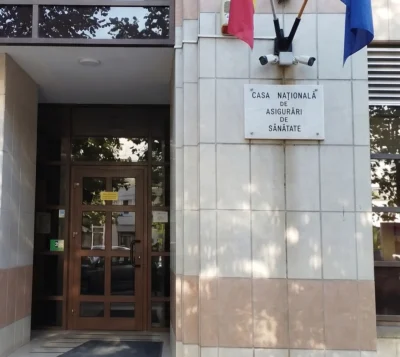
CNAS and STS have launched a European project for the cross-border exchange of medical images, laboratory results and discharge reports by 2029.

The INTENSIV+ project will train 966 ICU professionals and develop national curricula, medical simulation scenarios, and a critical care guideline.

Nearly 3 in 10 births in Romania in 2025 occurred without prenatal care. Among mothers under 15, the proportion exceeded 43%.