
One in five men worldwide has a high-risk HPV infection. Experts highlight the importance of vaccination and Romania’s low vaccination coverage.
OpenEvidence has withdrawn from the European Union and the United Kingdom. What this means for physicians using clinical AI

Adaugă Medic24 în sursele preferate Google
OpenEvidence has withdrawn from the EU and UK, raising questions about clinical AI, medical regulation and access to evidence-based tools in Europe.
OpenEvidence, one of the best-known medical AI platforms for evidence-based clinical searches, is no longer available to users in the European Union and the United Kingdom. The company cites regulatory uncertainty around artificial intelligence systems, including issues related to the EU Artificial Intelligence Act.
The decision radically changes the interpretation of the recent partnership announced last week between the Global Initiative for Asthma and OpenEvidence: although the GINA asthma recommendations will be integrated into a platform widely used by American physicians, this functionality is not currently available to doctors in Romania or in the other EU member states.
The platform displays a blocking message for users in the EU
For users accessing OpenEvidence from Romania, the website displays the message: “OpenEvidence is not available in the European Union or the U.K.” The company states that the decision is linked to “mounting regulatory uncertainty” regarding the treatment of AI systems in the European Union and the United Kingdom, including in the context of the EU Artificial Intelligence Act.
The withdrawal was reported at the end of April 2026 by health sector publications, which noted that OpenEvidence had blocked access for users in the EU and the United Kingdom, citing legislative uncertainty around AI tools that may influence clinical decisions.
A paradox: global guidelines become more accessible, but not for Europe
At first glance, the GINA–OpenEvidence announcement seemed like important news for evidence-based medicine. GINA publishes one of the most widely used global strategies for asthma management and prevention each year, and integrating this content into a medical AI platform could bring recommendations closer to the point of clinical decision-making.
OpenEvidence is described as a platform used by more than 40% of physicians in the United States, and its collaboration with GINA is specifically aimed at rapidly distributing asthma recommendations to clinicians.
For Europe, however, the message is different. Just as medical AI platforms are beginning to become distribution channels for major clinical guidelines, one of the most visible such platforms is withdrawing from the European space.
Regulating medical AI: necessary protection or barrier to access?
OpenEvidence’s decision opens a broader discussion about the balance between safety, legal accountability and access to innovation. In medicine, caution is natural. An AI tool that provides clinical answers cannot be compared with a general-purpose chatbot, and the risks related to errors, hallucinations, bias or recommendations that are not adapted to the local context are real.
At the same time, OpenEvidence’s withdrawal also shows what can happen when the regulatory framework is perceived as unpredictable or difficult to navigate: some companies may choose to stop offering the service, at least temporarily, in markets considered more legally complex.
What European physicians actually lose
For physicians who use AI for clinical documentation and research, the absence of OpenEvidence does not mean losing access to guidelines or scientific articles. These remain available through traditional channels: professional organizations’ websites, medical journals, bibliographic databases and academic search engines. For example, the latest GINA updates are presented in the recording of this webinar organized at the beginning of May by the European Respiratory Society.
What is lost is the interface layer: the ability to quickly formulate a clinical question and receive a structured synthesis, with relevant medical sources, in language close to everyday practice.
For family physicians, pulmonologists, pediatricians or allergologists, such a platform could be useful in common situations: insufficient asthma control, choosing the appropriate treatment step, adjusting inhaled therapy, assessing adherence, identifying at-risk patients or deciding when to refer to a specialist.
Europe needs its own model of clinical AI
The withdrawal of OpenEvidence should not be read only as a conflict between an American company and European legislation. Rather, it is a signal that Europe needs its own ecosystem of medical AI tools, built from the outset for its regulatory requirements, its languages and the specific features of its healthcare systems.
European alternatives, or platforms compliant with local requirements, are already being mentioned in health tech discussions, including tools that are trying to position themselves as solutions for clinicians in the EU and the United Kingdom.
The stake is not only technological. It is also one of digital medical sovereignty. If European physicians are to use clinical AI in the coming years, the question is not whether these tools should be regulated, but how they can be regulated clearly enough to be safe, transparent and still available.
A lesson for digital medicine
The OpenEvidence case shows that digital medicine is entering a new stage. We are no longer talking only about useful applications, but about clinical infrastructure, responsibility, access and differences between regulatory spaces.
For physicians in Romania, the immediate message is simple: the integration of GINA into OpenEvidence is relevant as a global trend, but it does not currently produce a direct benefit in local practice as long as the platform is not available in the European Union.
In the long term, however, the issue is more important than a single platform. If clinical AI becomes a routine tool in medical practice, Europe must find a functional balance between patient protection and physicians’ access to modern, validated and useful tools.
Medic24 - Romania's healthcare system at a glance

Romania introduces new medical fitness rules for obtaining and renewing driving licences from 6 November 2026. What changes for drivers and doctors?
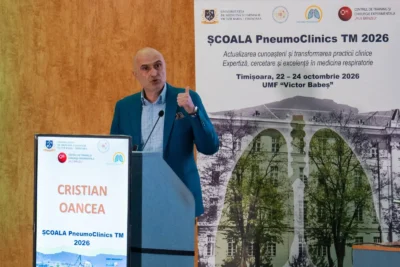
Dr. Cristian Oancea warns that persistent coughing in smokers may be a sign of lung cancer. Learn which warning signs require medical investigation.

Romania’s Parliament approves the Luca Niculescu government. Alexandru Rogobete is set to return as Health Minister, with healthcare funding and CNAS reform among his priorities.

Influenza vaccines for the 2026–2027 season in Romania: trivalent formulations, age groups, doses, contraindications, reimbursement and storage requirements.
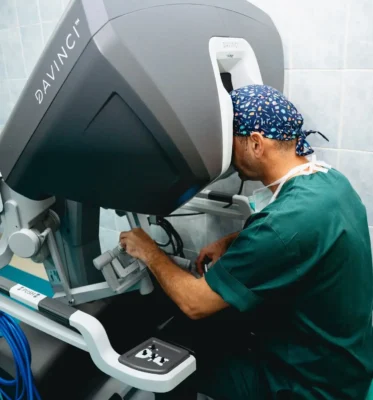
Cluj Oncology Institute has completed its 100th robot-assisted operation, performed on a 59-year-old woman with rectal cancer by dr. Cătălin Vlad’s team.