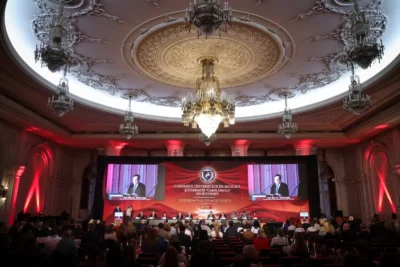
One in five men worldwide has a high-risk HPV infection. Experts highlight the importance of vaccination and Romania’s low vaccination coverage.
TOPIC: Doctors’ and Nurses’ Salaries 2027
Healthcare salaries: Resident doctors warn that the draft new salary law could lead to income decreases by reducing bonuses

Adaugă Medic24 în sursele preferate Google
Resident doctors warn that the draft new salary law could reduce incomes due to the absence of minimum guaranteed bonuses.
The Multidisciplinary Society of Resident Doctors warns, in a statement, that the current version of the draft new salary law could lead to pay cuts for some resident doctors, particularly through the absence of minimum guaranteed bonuses for certain specialties.
The position comes in the context of consultations held with healthcare representatives and public debate over the new salary scale for the public sector. The Sanitas Federation has also announced that it rejects the draft in its current form, which it considers unfavorable to employees in healthcare and social assistance, while the “Solidaritatea Sanitară” trade union says that “the new draft law reduces the reward gap between those who sacrifice their personal and family life for these services and those who work exclusively during normal working hours to a humiliating difference of only 10%”.
What changes for resident doctors
According to the statement issued by the Multidisciplinary Society of Resident Doctors, the key elements for residents are the salary coefficients, the reference value, seniority increments and bonuses.
SMMR says that, under the draft new law, the coefficients for resident doctors would decrease compared with the values in the previous law. For a first-year resident doctor, the coefficient would fall from 2.28 to 1.92. For the second year, it would decrease from 2.44 to 2.08; for the third year, from 2.68 to 2.24; for the fourth and fifth years, from 2.92 to 2.40; and for the sixth year, from 3.16 to 2.56.
The organization notes, however, that this decrease must be interpreted in the context of the overall reduction of coefficients across the public system. In the current law, the maximum coefficient is 12, while in the proposed draft the maximum would be 8, the level assigned to the President of Romania.
The reference value would increase, but the issue lies with bonuses
SMMR emphasizes that the reference value set out in the draft is currently 4,100 lei. Based on this value, the gross salary of a first-year resident doctor at grade 0 would reach 7,872 lei, excluding bonuses.
The organization recalls that the gross salary of a first-year resident doctor, excluding bonuses, increased from 1,985 lei in 2017 to 5,700 lei in the 2018–2023 period and to 7,125 lei in 2024, following successive increases in March and June.
According to the statement, the seniority increments would not change.
Bonuses would be capped differently, and some would no longer be granted
According to SMMR, several bonuses would disappear under the current draft, including the bonus for holding a doctoral degree, while for certain specialties, such as internal medicine, the bonus would disappear completely.
In the draft, bonuses for healthcare workers would be divided into several categories: dangerous working conditions up to 15%, particularly dangerous working conditions level I up to 40%, particularly dangerous working conditions level II up to 50%, and difficult working conditions 5%. These bonuses could not be combined. For work carried out near radiation sources, a bonus of up to 10% could be granted, depending on the risk category.
An important change flagged by the organization is the reduction of the average cap for bonuses. While hospitals currently apply a 30% limit for the average bonuses granted to employees, the draft would reduce this limit to 20%. Bonuses for night work and for work in isolated or hard-to-staff localities would not be included in this calculation, according to SMMR.
The flagged risk: a 0% bonus for some residents
The main problem identified by the Multidisciplinary Society of Resident Doctors is the lack of a minimum bonus range for certain specialties.
In the absence of a minimum bonus, SMMR warns that the budget holder, meaning the paying hospital, could grant a 0% bonus to resident doctors. The organization argues that this could reduce the real incomes of some residents and deepen professional dissatisfaction, in a context in which the medical system is already facing the risk of staff exodus.
SMMR points out that resident doctors are in a particular situation because their position changes from year to year and their income may vary depending on the rotation they are completing. For this reason, the organization believes there is no clear traceability of the salary impact and that some residents may not qualify for the promised compensatory amounts.
The example presented by SMMR
According to the calculations presented by the organization, a first-year resident doctor with a 0% bonus currently receives a net salary of 4,371 lei, while under the draft law they would receive 4,605 lei net.
The problem arises in the case of residents who were receiving bonuses. SMMR says that a first-year resident doctor with a 12% bonus currently receives 4,771 lei net. The following year, as a second-year resident, if the bonus were to become 0%, they would receive 4,989 lei net. The amount would be higher than the current salary, but about 100 lei lower than the estimated level under the law currently in force, where it could reach 5,091 lei.
SMMR considers that this situation illustrates the risk that the real income of some residents could be affected by the reduction or elimination of bonuses, even if the reference value increases.
SMMR calls for negotiations to resume
The Multidisciplinary Society of Resident Doctors announces that it joins the Sanitas Federation of Romania in rejecting the draft law in its current form.
The organization calls for negotiations to resume and criticizes the accelerated pace at which they were scheduled, arguing that discussions on the salaries of medical staff must be organized with sufficient time for analysis and corrections.
The debate over the new healthcare salary scale remains important not only for the incomes of resident doctors, but also for the predictability of medical careers in the first years of practice, in a system where retaining medical staff is already a major problem.
Medic24 - Romania's healthcare system at a glance

Romania introduces new medical fitness rules for obtaining and renewing driving licences from 6 November 2026. What changes for drivers and doctors?
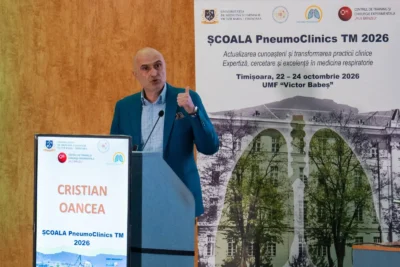
Dr. Cristian Oancea warns that persistent coughing in smokers may be a sign of lung cancer. Learn which warning signs require medical investigation.
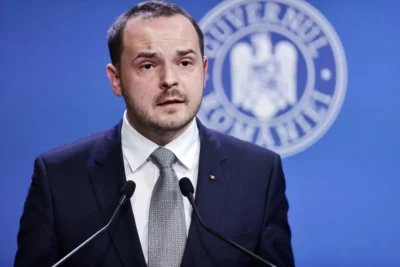
Romania’s Parliament approves the Luca Niculescu government. Alexandru Rogobete is set to return as Health Minister, with healthcare funding and CNAS reform among his priorities.

Influenza vaccines for the 2026–2027 season in Romania: trivalent formulations, age groups, doses, contraindications, reimbursement and storage requirements.
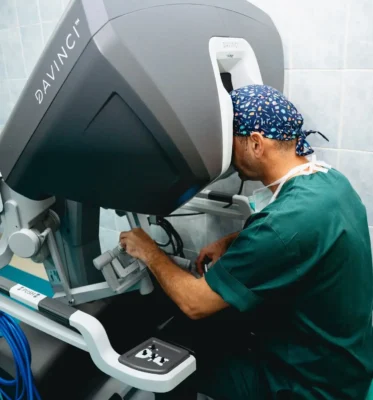
Cluj Oncology Institute has completed its 100th robot-assisted operation, performed on a 59-year-old woman with rectal cancer by dr. Cătălin Vlad’s team.