
How much do Romanians trust doctors, hospitals and science? An analysis of Wellcome, Ipsos, OECD and Eurobarometer data, with European comparisons.
Romanian study finds Klebsiella pneumoniae resistant to last-resort antibiotics. Combination therapy shows promising results

Adaugă Medic24 în sursele preferate Google
A Romanian study reveals high resistance to last-resort antibiotics in Klebsiella pneumoniae strains. Findings and implications for clinical practice.
A study conducted at the Prof. Dr. Matei Balș National Institute for Infectious Diseases in Bucharest has revealed high levels of resistance to last-resort antibiotics among carbapenemase-producing Klebsiella pneumoniae strains. Approximately 62% of the isolates analyzed produced two types of carbapenemases simultaneously, while resistance rates to some reserve antibiotics exceeded 90%. However, researchers also identified an antibiotic combination that demonstrated promising activity in laboratory testing.
The findings were published in September 2025 in the scientific journal GERMS, in a prospective study conducted over one year, between August 2023 and July 2024.
The findings are also relevant in light of data presented at ESCMID Global in April 2026, suggesting that a highly antibiotic-resistant Klebsiella pneumoniae clone identified in Romanian hospitals may already be endemic in the country.
62% of carbapenemase-producing strains carried two enzymatic resistance mechanisms
The study included 139 distinct Klebsiella pneumoniae isolates collected from patients admitted to the Matei Balș Institute. All isolates showed reduced susceptibility to meropenem, an antibiotic belonging to the carbapenem class.
Of these, 129 isolates (92.8%) produced carbapenemases, enzymes capable of inactivating antibiotics from this class.
The analysis revealed the following distribution of resistance mechanisms:
- 79 isolates (61.2%) simultaneously produced NDM and OXA-48 carbapenemases;
- 29 isolates (22.5%) produced NDM;
- 12 isolates (9.3%) produced OXA-48-type carbapenemases;
- 8 isolates (6.2%) produced KPC;
- One isolate simultaneously produced NDM and KPC.
Overall, 80 of the 129 carbapenemase-producing isolates (62%) carried two types of these enzymes.
The simultaneous production of multiple carbapenemases represents a major therapeutic challenge, as these resistance mechanisms can limit the effectiveness of antibiotics specifically developed to treat infections caused by multidrug-resistant bacteria.
Resistance rates exceeding 90% for some last-resort antibiotics
Researchers evaluated the susceptibility of the 129 carbapenemase-producing isolates to five antibiotics or antibiotic combinations used to treat infections caused by multidrug-resistant bacteria.
The results showed the following resistance rates:
- Ceftolozane/tazobactam: 98.4% of isolates;
- Aztreonam: 98.4%;
- Imipenem/relebactam: 90%;
- Ceftazidime/avibactam: 83.7%;
- Cefiderocol: 35.7%.
Cefiderocol showed the lowest resistance rate among the five treatments evaluated. Nevertheless, more than one-third of the isolates analyzed were resistant to this antibiotic as well.
The authors also compared cefiderocol resistance before and after its introduction into clinical practice at the institute on March 1, 2024. The proportion of resistant isolates increased from 34.3% to 37.1%, but the difference was not statistically significant.
An antibiotic combination showed activity against 98.5% of isolates
One of the study’s most important findings concerns the evaluation of two potentially synergistic antibiotic combinations.
The combination of ceftazidime/avibactam and aztreonam demonstrated in vitro activity against 127 of the 129 isolates analyzed (98.5%).
The second combination, imipenem/relebactam plus aztreonam, demonstrated in vitro activity against 103 isolates (79.8%).
These results are particularly relevant given that aztreonam and ceftazidime/avibactam, when tested separately, showed high resistance rates.
The explanation lies in their different mechanisms of action. NDM-type enzymes do not inactivate aztreonam, but this antibiotic can be broken down by other beta-lactamases produced simultaneously by the bacterium. Avibactam inhibits some of these enzymes and can therefore protect aztreonam from degradation.
However, the authors emphasize that laboratory findings do not automatically demonstrate clinical effectiveness. Additional evidence is needed to evaluate treatment outcomes in patients.
According to the IDSA guidance updated in July 2026, aztreonam/avibactam and cefiderocol are preferred treatment options for invasive infections caused by NDM-producing Enterobacterales. The combination of ceftazidime/avibactam and aztreonam represents an alternative when aztreonam/avibactam is unavailable.
Connection with ESCMID 2026 findings: the ST383 clone may already be endemic in Romania
The findings from the Matei Balș Institute gain additional significance in light of data presented in April 2026 by Professor Valeriu Gheorghiță at the ESCMID Global congress.
According to Medic24’s previous report on the Klebsiella pneumoniae ST383 clone, approximately 30% of carbapenem-resistant isolates analyzed at the Prof. Dr. Agrippa Ionescu Clinical Emergency Hospital belonged to this clone.
The findings were based on an analysis of bacterial isolates collected between 2023 and 2025. Most ST383 isolates carried genes encoding two types of carbapenemases: NDM and OXA-48.
Researchers also identified plasmids combining antibiotic resistance determinants with virulence factors, an association that raises additional concerns about the potential to cause severe infections.
Based on these observations and other surveillance data, the researchers proposed that ST383 may already be endemic in Romania.
The two studies highlight a common problem: the presence of Klebsiella pneumoniae strains that simultaneously produce NDM and OXA-48 carbapenemases. However, the Matei Balș study did not perform sufficiently extensive genomic characterization to determine whether the isolates analyzed belonged to the ST383 clone. Therefore, its findings cannot be interpreted as direct confirmation of the spread of this particular clone.
Implications for hospitals and clinical practice
Klebsiella pneumoniae is an opportunistic pathogen associated with urinary tract infections, pneumonia, wound infections, and bloodstream infections, particularly in vulnerable or hospitalized patients.
In the Matei Balș study, most isolates came from urinary tract infections (70.5%), followed by wound infections, lower respiratory tract infections, and bloodstream infections.
The findings underscore the importance of rapid microbiological identification of the pathogen, determination of resistance mechanisms, and antimicrobial susceptibility testing before treatment selection, whenever the clinical situation allows.
They also highlight the need to strengthen antimicrobial resistance surveillance, infection prevention and control measures in healthcare settings, and responsible antibiotic use.
The authors note that the study was conducted at a single tertiary care hospital specializing in infectious diseases, using a selected group of isolates with reduced susceptibility to meropenem. Consequently, the observed percentages do not represent resistance rates among all Klebsiella pneumoniae strains circulating in Romania.
Another limitation of the research was that genetic characterization was performed on only 64 of the 129 carbapenemase-producing isolates.
Overall, the findings show that therapeutic options can become extremely limited in infections caused by Klebsiella pneumoniae strains carrying multiple resistance mechanisms. At the same time, the laboratory activity demonstrated by certain antibiotic combinations offers important directions for treating these infections and for future clinical research.
Medic24 - Romania's healthcare system at a glance

A Romanian study reveals high resistance to last-resort antibiotics in Klebsiella pneumoniae strains. Findings and implications for clinical practice.

One in five men worldwide has a high-risk HPV infection. Experts highlight the importance of vaccination and Romania’s low vaccination coverage.

Romania introduces new medical fitness rules for obtaining and renewing driving licences from 6 November 2026. What changes for drivers and doctors?
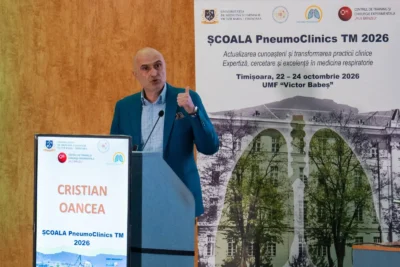
Dr. Cristian Oancea warns that persistent coughing in smokers may be a sign of lung cancer. Learn which warning signs require medical investigation.

Romania’s Parliament approves the Luca Niculescu government. Alexandru Rogobete is set to return as Health Minister, with healthcare funding and CNAS reform among his priorities.