
The European Parliament calls for at least €2.5 billion to fight cancer in 2028–2034. Gheorghe Falcă advocates equitable access to oncology treatments.
UBB launches nationwide study on young people’s mental health. Thousands to undergo MRI, EEG and genetic assessments
Adaugă Medic24 în sursele preferate Google
Babeș-Bolyai University launches RoMIND, a nationwide longitudinal study of young people's mental health using MRI, EEG, genetic and psychological assessments.
Babeș-Bolyai University (UBB) in Cluj-Napoca has launched a national mental health research ecosystem bringing together nine institutions and including a longitudinal study involving several thousand adolescents and young adults in Romania. The research will use neurological, imaging, genetic and psychological assessments to identify risk factors and mechanisms that contribute to maintaining mental health.
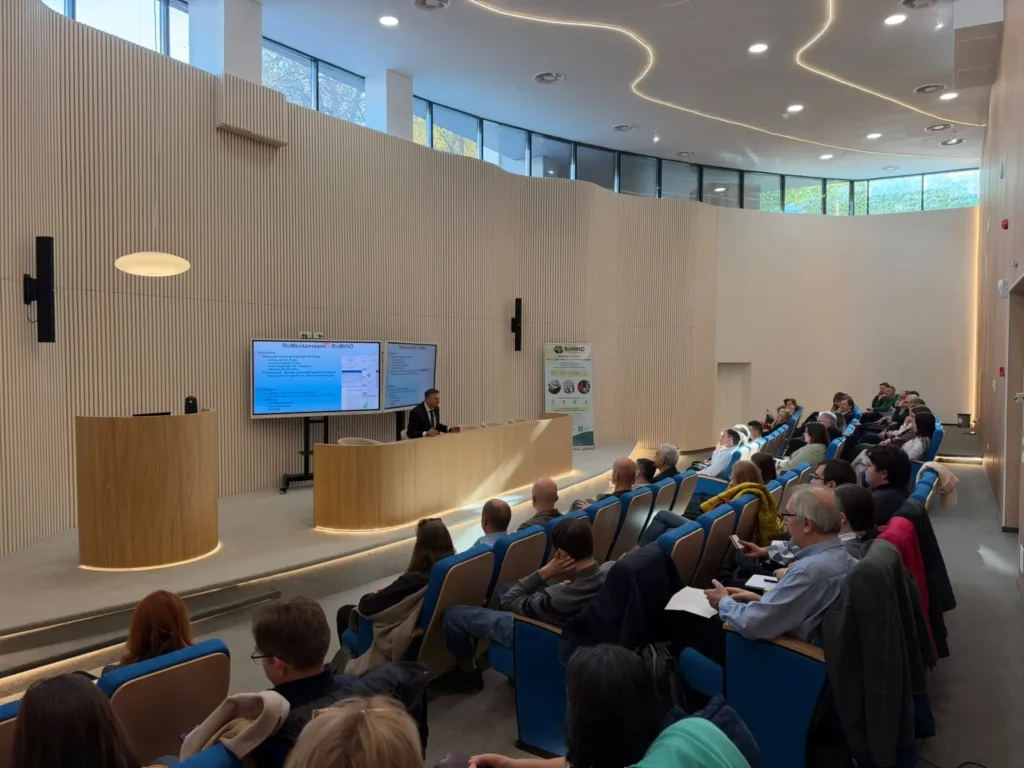
The initiative was presented on Saturday, November 7, 2026, during an event organized by UBBMed, Babeș-Bolyai University’s health and medicine platform.
The project brings together three components: the Centre of Excellence in Neuroscience and Mental Health (UBBMentalHealth), the National Consortium of Excellence in Mental Health (RoMentalHealth), and the RoMIND study, which will investigate neurocognitive development and mental health, with a particular focus on adolescents and young adults.
RoMIND study to involve several thousand young people across four university centres
The consortium’s main research initiative is RoMIND (Romanian Multimodal Investigation of Neurocognitive and Mental Health Development), which aims to become the largest longitudinal and multimodal study of young people’s mental health conducted in Romania to date.
The study will involve several thousand adolescents and young adults recruited from four university centres:
- Cluj-Napoca;
- Bucharest;
- Timișoara;
- Iași.
Participants will undergo three assessments, each one year apart, to monitor changes in mental health and examine the relationships between genetic factors, living environments, brain development and cognitive functioning.
The sample will also include specific clinical populations, while an exploratory component will focus on older adults to investigate changes associated with ageing.
Participant recruitment is scheduled to begin in the second half of 2027 and continue until 2029.
MRI, EEG and genetic testing to identify mental health risk factors
The research will combine psychological and medical assessments with advanced methods for investigating brain function and the biological mechanisms associated with mental health.
The announced research protocol includes:
- Electroencephalography (EEG), to investigate the brain’s electrical activity;
- Magnetic resonance imaging (MRI), to assess brain structure and function;
- Genetic and metabolic analyses, to investigate biological mechanisms involved in vulnerability to mental disorders;
- Neurocognitive assessments, to analyse cognitive functions and their development;
- Psychological and psychiatric assessments, including the identification and characterization of mental disorders.
By integrating these data, researchers aim to understand how genetic and environmental factors interact with biological, cognitive and psychosocial processes.
A central objective is to identify both factors that increase vulnerability to mental disorders and protective mechanisms associated with psychological resilience.
Prevention of mental disorders among the project’s main priorities
According to UBB representatives, the new programme aims to expand research beyond the investigation of treatments by placing greater emphasis on prevention and the early identification of risk factors.
The project coordinators believe that understanding the biological, psychological and sociocultural mechanisms involved in mental health could contribute, in the long term, to the development of preventive interventions better tailored to different population groups.
UBB Rector Prof. Daniel David, PhD, a psychologist, emphasized the need to overcome fragmentation between disciplines that study how the human mind functions, by integrating genetic, molecular, brain, cognitive and psychosocial data.
He also highlighted the importance of investigating how social and cultural changes influence individuals’ development, adaptation and mental health.
The project will also explore changes associated with ageing, including factors that may help maintain health and quality of life in older age.
Family physicians play an important role in the early identification of mental health problems among adolescents by assessing behavioural and emotional changes, recognizing signs of anxiety or depression, and referring patients to specialized services when necessary. These issues are discussed in greater detail in the Medic24 guide to adolescent health from the family physician’s perspective, in the section dedicated to mental health conditions.
A biobank to support future mental health research
Another component of the project is the development of a biobank for the long-term storage of biological samples collected during the research.
According to Prof. Andrei Miu, PhD, a psychologist, the infrastructure will be developed following international models and will allow samples to be used in subsequent studies, including international scientific collaborations.
The programme will also include experimental studies using animal models to investigate the biological mechanisms through which interactions between genes and the environment may influence mental health.
The project coordinators describe the biobank and research infrastructure as long-term investments intended to support scientific activity beyond the end of the current project’s funding period.
Nine Romanian institutions participate in the RoMentalHealth consortium
The National Consortium of Excellence in Mental Health is coordinated by Professors Daniel David and Andrei Miu and brings together research groups from nine institutions:
- Babeș-Bolyai University in Cluj-Napoca, through the UBBMentalHealth Centre;
- Transylvanian Institute of Neuroscience;
- Technical University of Cluj-Napoca;
- West University of Timișoara;
- „Costin D. Nenițescu” Institute of Organic and Supramolecular Chemistry of the Romanian Academy;
- „Prof. Dr. Alexandru Obregia” Clinical Hospital of Psychiatry in Bucharest;
- „Constantin Rădulescu-Motru” Institute of Philosophy and Psychology of the Romanian Academy;
- „Grigore T. Popa” University of Medicine and Pharmacy in Iași;
- „Socola” Institute of Psychiatry in Iași.
The consortium’s activities will also benefit from the guidance of an international scientific advisory committee comprising researchers affiliated with universities such as Harvard, Columbia University, Vrije Universiteit Amsterdam and the University of Milano-Bicocca.
Funding secured for 2026–2030
The research programme has secured funding for the 2026–2030 period through the national Centres of Excellence funding competition organized by UEFISCDI, Romania’s Executive Agency for Higher Education, Research, Development and Innovation Funding.
The project is entitled „Mental Health in a Rapidly Changing Society: A Multilevel Approach from Genes and Molecules to Brain Networks and Psychosocial Systems” and has the identification code PN-IV-P6-6.1-CoEx-2024-0139.
By integrating research from psychology, psychiatry, neuroscience, genetics, bioinformatics and other disciplines, the project initiators aim to develop a national infrastructure that will advance understanding of mental health mechanisms and support the development of evidence-based prevention and intervention strategies.
RoMIND is currently in the research preparation phase. The project has not yet published findings on participants’ mental health, and its impact on the prevention and treatment of mental disorders can only be assessed after the studies have been conducted.
Medic24 - Romania's healthcare system at a glance

Carol Davila University of Medicine and Pharmacy ranks 10th among 155 universities in the Times Higher Education Central and Eastern Europe Spotlight 2026 ranking.

How can family physicians recognise perimenopause and menopause? Symptoms, clinical diagnosis, FSH testing, differential diagnosis and warning signs.

Romania’s CNAS has cancelled a competition for 16 health insurance fund directors just two days before the exam. Former president Horațiu Moldovan demands answers.

Romania’s 2026 residency exam attracted 9,969 applicants for 5,483 places and posts. Top scores, passing thresholds, specialties and official statements.

A new European consensus recommends regular periodontal assessment in children, age-appropriate prevention and active family involvement.