
The European Parliament calls for at least €2.5 billion to fight cancer in 2028–2034. Gheorghe Falcă advocates equitable access to oncology treatments.
Healthcare salary law negotiations to begin in January 2027. On-call pay and bonuses to be discussed by year-end
Adaugă Medic24 în sursele preferate Google
Romania's Health Ministry and Solidaritatea Sanitară discussed healthcare salaries, on-call pay, bonuses, collective bargaining and medical malpractice legislation.
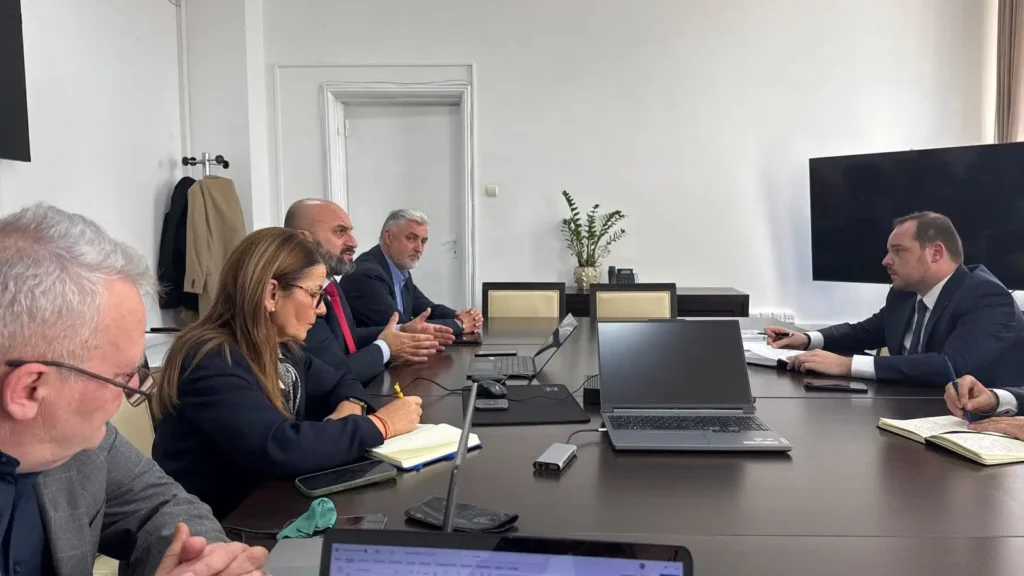
Negotiations on Romania’s new healthcare salary law are expected to begin in January 2027 and continue for three months, according to the timetable presented by Health Minister Alexandru Rogobete during a meeting on Monday, November 9, with representatives of the Solidaritatea Sanitară Federation (FSSR). Several pay-related issues, including compensation for medical residents’ on-call duties and bonuses for healthcare workers, are expected to be discussed before the end of 2026.
The federation presented the Ministry of Health with a series of demands concerning salaries, working conditions and the professional rights of healthcare employees. Following the meeting, the trade union organization announced the main conclusions and the timetable for further discussions with the minister.
On-call pay, bonuses and administrative staff salaries on the negotiation agenda
According to FSSR, several pay-related issues are expected to be negotiated before the end of 2026, without waiting for the completion of the new salary law.
The main demands include:
- Updating hourly rates for doctors’ on-call duties, including payment for on-call work performed by medical residents;
- Revising bonuses and allowances for various categories of employees, including nurses and nursing assistants;
- Eliminating salary losses caused by current legislation for certain categories of workers, such as sterilization department staff;
- Adjusting the salaries of non-medical, technical and administrative personnel (TESA).
In the document submitted to the Ministry of Health, the federation calls for on-call hours to be paid at least at the hourly rate corresponding to employees’ basic working schedule, with appropriate additional compensation for night work.
FSSR also demands that all bonuses and allowances be calculated based on employees’ current base salaries, eliminating discrepancies resulting from the use of outdated salary benchmarks.
Regarding the new salary law, the trade union organization is requesting a guarantee that employees’ total gross monthly income will not decrease following implementation of the new provisions, as well as financial impact simulations for each professional category.
The federation has also proposed an alternative solution: if the new law cannot be implemented at the beginning of 2027, next year’s budget should include targeted salary adjustments under the existing Law No. 153/2017.
Healthcare sector collective agreement: Negotiations expected to resume
Another important topic discussed during the meeting was the negotiation of a sector-wide collective bargaining agreement for healthcare workers.
According to FSSR, the minister stated that negotiations would begin after the appointment of a new secretary of state responsible for social dialogue within the Ministry of Health.
The federation had formally requested the start of negotiations for a new sector-wide collective agreement on October 27.
The trade union organization warns that the absence of an updated sector-wide collective agreement affects the regulation and implementation of various employment rights, including additional leave entitlements, overtime rules, measures to prevent violence against healthcare personnel and working time arrangements.
Recognition of nurses’ qualifications and additional working hours
The discussions also addressed two demands affecting career development and the social rights of healthcare employees.
Regarding the recognition and equivalence of nurses’ professional qualifications, FSSR reported that the health minister had expressed his agreement in principle with the proposal.
The federation’s proposal aims to recognize the competencies acquired by general nurses who graduated from post-secondary vocational nursing schools, taking into account professional experience, additional training and competency assessments, while complying with the applicable European regulatory framework.
Another demand concerns recognizing the early completion of the pension contribution period for employees who systematically work beyond their standard working hours, including through on-call duties.
According to FSSR, the minister asked the federation to develop a specific proposal outlining how such a measure could be regulated. At present, this does not constitute a newly established legal entitlement.
Medical malpractice legislation to be discussed in December. Artificial intelligence also on the agenda
Discussions on amendments to medical malpractice legislation are expected to begin in early December 2026.
The Ministry of Health separately confirmed that, in partnership with the World Bank, it would launch working groups to review the legislative framework, aiming to develop a fairer mechanism for both patients and healthcare professionals.
FSSR advocates replacing the current approach to medical malpractice with a system focused on compensating patients for harm arising from medical care. Its proposals include introducing an out-of-court compensation procedure and establishing a dedicated compensation fund.
The federation also called for regulations governing the use of artificial intelligence in healthcare employment relationships, ensuring that the introduction of new technologies is accompanied by measures to inform, consult and protect employees.
According to FSSR, the minister acknowledged the need to initiate discussions on this issue, with the participation of government representatives responsible for digitalization and artificial intelligence.
Monthly meetings to monitor progress on union demands
The Ministry of Health announced that the discussions also covered hospital reclassification, revisions to healthcare staffing standards based on the complexity of medical activities, the establishment of the Healthcare Sectoral Committee and the development of professional training in palliative care.
Health Minister Alexandru Rogobete and representatives of the Solidaritatea Sanitară Federation agreed to continue their dialogue through monthly meetings, during which progress and the necessary legislative solutions will be reviewed.
Although deadlines for starting negotiations and agreements in principle on certain demands were announced, the meeting did not result in the adoption of any legislative changes or salary increases. Implementation of the proposed measures will depend on the outcome of negotiations and the adoption of the necessary legislation.
Medic24 - Romania's healthcare system at a glance

Carol Davila University of Medicine and Pharmacy ranks 10th among 155 universities in the Times Higher Education Central and Eastern Europe Spotlight 2026 ranking.

How can family physicians recognise perimenopause and menopause? Symptoms, clinical diagnosis, FSH testing, differential diagnosis and warning signs.
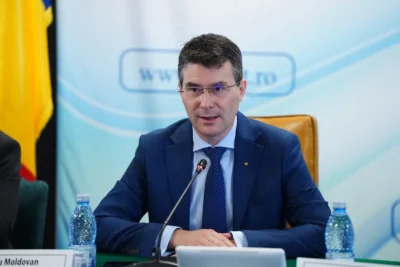
Romania’s CNAS has cancelled a competition for 16 health insurance fund directors just two days before the exam. Former president Horațiu Moldovan demands answers.

Romania’s 2026 residency exam attracted 9,969 applicants for 5,483 places and posts. Top scores, passing thresholds, specialties and official statements.

A new European consensus recommends regular periodontal assessment in children, age-appropriate prevention and active family involvement.